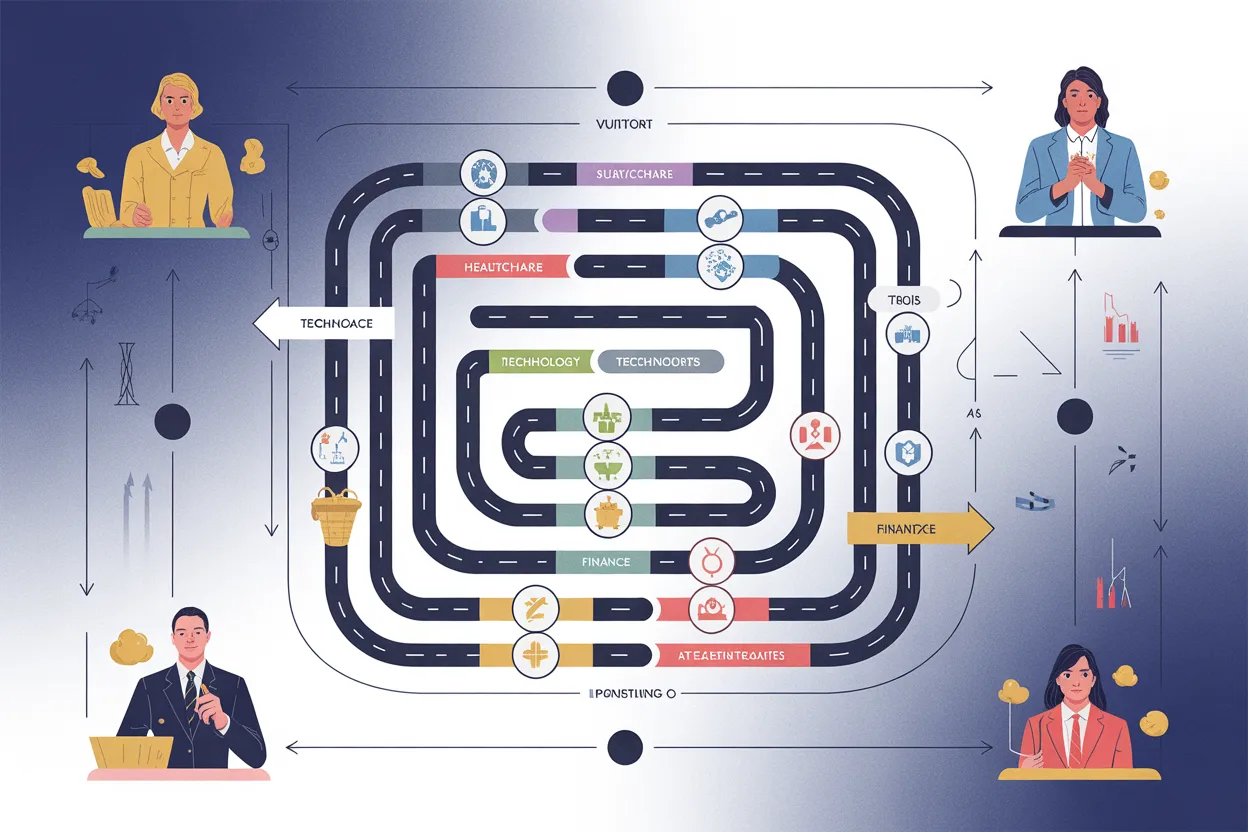
Business Vertical Classification Categories
The Power of Finding Your Perfect Business Niche
Business vertical classification categories bring order to a noisy market. When your lane is clear, your message lands better, your buyers trust faster, and your growth feels easier to control.
Starting a new journey in the world of commerce feels like stepping into a giant library without a map. You know there is great information inside, but you just need to know which shelf to look at first. This is where business vertical classification categories come into play for every smart owner. Think of these categories as the secret GPS for your company’s long-term success and daily operations. When you know exactly where your business fits, everything from your daily tasks to your big dreams becomes much easier to manage. It helps you talk to the right people at the right time without wasting your precious energy or money.
Many people try to sell everything to everyone, but that usually leads to a lot of confusion and very little profit. By focusing on business vertical classification categories, you narrow your vision to what truly matters for your specific industry and customer base. This focus allows you to become a true expert in your field rather than a jack-of-all-trades who knows a little about nothing. When customers see that you understand their specific world, they trust you much more quickly and stay loyal to your brand. It is the smartest way to build a foundation that can survive any changes in the global economy or local market trends.
Defining Business Vertical Classification Categories
To understand the big picture, we must first look at what these terms actually mean in the real world of commerce. Business vertical classification categories are simply ways to group companies based on the specific products they make or the unique services they offer. A vertical market is like a tall building where everyone inside is working on the same specific goal or type of product. For example, everyone in the medical vertical is focused on health, while everyone in the legal vertical is focused on law and justice. This grouping makes it very easy for suppliers and customers to find exactly what they need without searching through unrelated businesses.
In the past, people used very broad terms to describe what they did for a living, but today’s world requires much more detail. Using business vertical classification categories helps you identify your direct competitors and your most helpful partners within your specific lane. It also helps government agencies and tax offices understand how to treat your business when it comes to rules and regulations. By placing yourself in the right category, you ensure that you are following the correct laws and taking advantage of the right opportunities. It is all about clarity, organization, and making sure your business has a clear identity that anyone can understand.
Why Verticals Matter More Than Ever in 2026
The world is changing faster than ever, and customers are becoming very picky about who they spend their hard-earned money with today. They want to work with specialists who have a deep understanding of their unique problems and their specific daily needs. This is why business vertical classification categories are more important now than they have ever been in the history of global trade. If you are a specialist, you can charge better prices because people value your expert knowledge over a general service. You are not just another face in the crowd; you are the go-to person for a very specific and important solution.
Furthermore, technology has made it much easier for small businesses to compete with giant corporations if they stay focused on their niche. By using business vertical classification categories, you can find tiny gaps in the market that the big companies are too slow to notice. You can move quickly, offer better customer service, and create products that fit your audience like a glove. This specific focus creates a protective wall around your business because it is very hard for outsiders to replicate your expertise. It allows you to grow steadily and build a reputation for being the absolute best at what you do in your area.
How to Identify Your Specific Business Vertical
Finding your place among the many business vertical classification categories might seem hard at first, but it starts with one simple question. Ask yourself: “What is the one main problem I solve for my customers every single day without fail?” Once you answer that, look at who else is solving that same problem and see what labels they use for themselves. You can look at industry reports or even check how your business is listed on social media platforms to see common themes. This process of self-reflection helps you realize if you are spread too thin or if you are right on target.
Another great way to find your vertical is to look at your most successful and happiest customers to see what they have in common. Do they all work in schools? Are they all trying to fix their homes? By analyzing your best clients, you can see which business vertical classification categories actually bring you the most joy and profit. Sometimes, you might find that you belong in a “micro-vertical,” which is an even smaller and more specialized group. Embracing this specific identity is not limiting; it is actually a powerful way to unlock new doors and find people who are desperate for your help.
The Difference Between Horizontal and Vertical Markets
It is very helpful to understand that not all businesses look at the market in the same way when they plan their growth. A horizontal market is like a wide net that tries to catch many different types of fish across the entire ocean. For example, a company that sells office chairs is horizontal because every single office in every industry needs a place to sit. However, business vertical classification categories are different because they focus on the specific needs of one type of fish only. A company that makes specialized dental chairs is in a vertical market because they only serve dentists.
When you choose to focus on business vertical classification categories, you are deciding to go deep instead of going wide with your efforts. Going deep allows you to understand the “language” of your industry, including the special slang and the unique rules they follow. While horizontal companies have more potential customers, they also have much more competition and have to spend more on general advertising. Vertical companies often have higher profit margins because their customers are willing to pay more for a product that is perfectly tailored to them. Choosing between these two paths will define how you spend your time and money every day.
Maximizing Growth Using Industry Standards
Every major industry has a set of standards and codes that help keep everything organized and running smoothly for everyone involved. When you align your brand with recognized business vertical classification categories, you make it easier for other businesses to work with you. For instance, many government contracts and large corporate deals require you to have a specific industry code before you can even apply. Being organized in this way shows that you are a professional who takes your work seriously and understands the big picture. It builds instant trust with banks, investors, and high-quality partners who want to help you grow.
Using these standards also helps you track your progress compared to other companies that are similar to yours in size and scope. You can look at industry averages for things like profit, employee pay, and customer satisfaction to see how you are doing. Without business vertical classification categories, you would be comparing your “apples” to someone else’s “oranges,” which doesn’t help you improve. By looking at the right data, you can see exactly where you need to get better and where you are already winning. This kind of “people-first” data analysis is what separates the most successful modern leaders from those who are just guessing.
The Role of Technology in Categorization
Technology has completely changed how we think about business vertical classification categories by providing us with amazing tools to sort data. In the past, you had to manually look through giant books to find where your business fit, but now software does it in seconds. Digital platforms use smart algorithms to suggest the best categories for your business based on the words you use on your website. This means that staying consistent with your message is very important if you want the internet to categorize you correctly. If your website is clear and focused, the right customers will find you much faster through search engines.
Furthermore, new technologies like artificial intelligence are creating entirely new business vertical classification categories that didn’t even exist five years ago. We now have verticals for things like virtual reality, green energy technology, and personalized medicine that are growing at incredible speeds. Staying updated on these new categories allows you to pivot your business or add new services before your competitors even wake up. It is an exciting time to be an entrepreneur because the digital world is constantly opening new doors for those who stay curious. Embracing these tech tools ensures that your business stays relevant and ready for whatever the future brings.
Common Challenges in Vertical Classification
Even though it is very helpful, choosing from the various business vertical classification categories can sometimes feel a bit confusing for new owners. One common challenge is that a business might feel like it fits into two or three different categories at the same time. For example, a company that makes software for hospitals could be in the “Technology” vertical or the “Healthcare” vertical. In these cases, it is usually best to pick the one that represents your primary customer and your most important source of income. You can always mention your secondary focus in your descriptions, but your main identity should be very clear.
Another challenge is when the market shifts and your chosen category starts to feel a little bit outdated or too small for your dreams. Industries change, and what was a popular business vertical classification categories choice ten years ago might be fading away today. It is important to review your classification every year to make sure it still matches what you actually do for your clients. Don’t be afraid to update your category if your business has evolved into something new and more exciting. Staying flexible while remaining focused is the secret sauce to long-term survival in any competitive global market environment.
Building Trust Through Clear Categorization
Trust is the most important currency in business, and being clear about your business vertical classification categories helps build it fast. When a customer lands on your website or walks into your shop, they should know exactly what you do within three seconds. If they have to guess, they will likely leave and find someone else who makes things easier for them to understand. Clear categorization tells the customer, “I am an expert in this specific thing, and I am here to help you.” It removes any doubt and makes the buying process feel safe, simple, and very professional for everyone.
This clarity also helps you build better relationships with your employees and your team members because they know exactly what the mission is. When everyone knows which business vertical classification categories the company belongs to, they can focus their skills on being the best in that field. It creates a sense of pride and belonging among the staff, which leads to better work and happier customers in the long run. People love being part of a winning team that has a clear identity and a strong sense of purpose. By being a leader who defines your vertical clearly, you attract the best talent and the most loyal customers.
Future Trends in Business Classification
Looking ahead, we can expect business vertical classification categories to become even more specialized as the world becomes more connected and complex. We are seeing a move toward “hyper-verticals,” where businesses focus on a very tiny sliver of a market and dominate it completely. For example, instead of just being in “Pet Care,” a company might focus only on “Organic Food for Senior Golden Retrievers.” This level of detail sounds small, but it allows for a very deep connection with a specific group of people. As data becomes more precise, our ability to categorize and find our perfect audience will only get better.
We are also seeing more collaboration between different business vertical classification categories to solve big world problems like climate change and global health. Companies from the “Energy” vertical are working with the “Auto” vertical to create better electric cars and charging stations for everyone. This “cross-vertical” work is where the most exciting innovations are happening right now and will continue to happen in the future. By knowing your own category well, you can find the perfect partners in other categories to create something truly amazing. The future is bright for those who understand their place in the world and are ready to grow.
| Category Type | Primary Focus | Key Example Industries | Main Customer Base |
|---|---|---|---|
| Financial Services | Money management and banking | Fintech, Insurance, Investing | Individual savers and corporations |
| Healthcare | Physical and mental wellness | Hospitals, Biotech, Telehealth | Patients and medical professionals |
| Retail & Trade | Selling goods to consumers | E-commerce, Grocery, Fashion | Everyday shoppers and families |
| Technology | Innovation and digital tools | Software, AI, Cybersecurity | Businesses needing digital solutions |
| Manufacturing | Creating physical products | Automotive, Textiles, Electronics | Wholesalers and large distributors |
| Professional Services | Expert advice and labor | Law firms, Accounting, Consulting | Clients needing specialized help |
Frequently Asked Questions
1. What are business vertical classification categories?
They are groups used to organize companies based on the specific industry they serve or the products they provide to their customers.
2. Why should I care about my business vertical?
Knowing your vertical helps you find the right customers, save money on advertising, and build a reputation as a trusted expert in your field.
3. Can a business belong to more than one vertical?
Yes, but it is usually best to focus on one primary vertical so your brand message stays clear and easy for people to understand.
4. How do I choose the right category for my startup?
Look at your main product and your target audience. See where your most successful competitors are listed and choose the category that fits your core mission.
5. Do business categories change over time?
Yes, as technology and society change, new categories are created and old ones might merge or disappear, so it is good to stay updated.
6. Is a vertical market better than a horizontal market?
Neither is “better,” but vertical markets often allow higher prices and less direct competition because you become a specialized expert.
Conclusion: Take Action Today
In conclusion, mastering business vertical classification categories is one of the most powerful steps you can take for your company’s future. It provides the clarity, focus, and professional image you need to stand out in a crowded and busy global marketplace. By choosing a specific lane and becoming the best at what you do, you create a business that is both profitable and meaningful. Remember that your category is not a cage; it is a foundation that gives you the strength to grow and reach new heights. Take the time to evaluate your business today and make sure you are positioned for the greatest possible success.